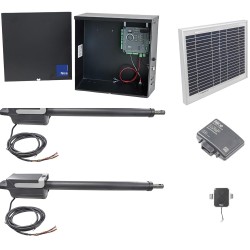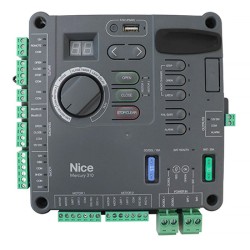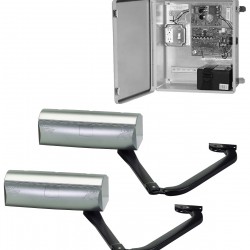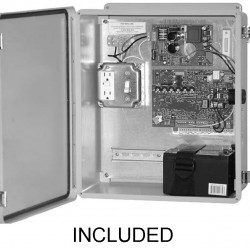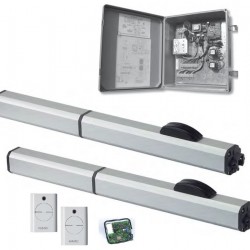
















Two gates. One synchronized system. A dual swing gate opener automates both leaves of a double-entry gate so they open and close together — giving you a wider entryway, a cleaner look, and hands-free access control without sacrificing the classic appeal of swinging gates.
Whether you are protecting a residential driveway, a gated community entrance, or a commercial property, the right dual swing system makes daily access effortless while keeping your property secure. This page walks you through how these systems work, what to look for when you buy, and how to find the right opener for your specific gate and application.
What Is a Dual Swing Gate Opener?
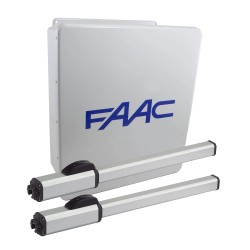
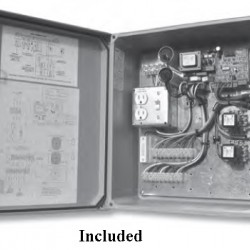
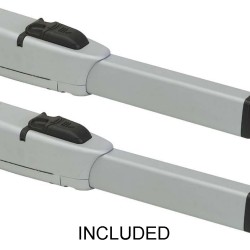
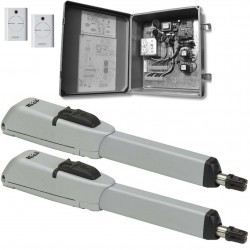
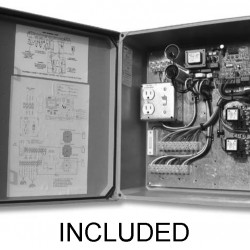
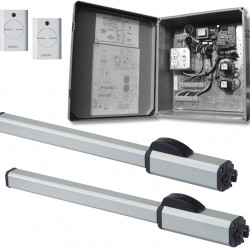
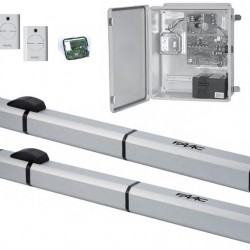
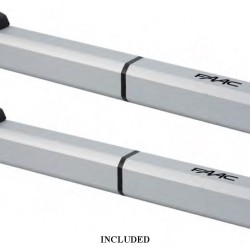
A dual swing gate opener is a motorized automation system that controls two gate leaves simultaneously. Each leaf gets its own operator — typically a linear actuator, underground ram, or articulated arm — and both are wired to a shared control board that coordinates their movement. When you press your remote, send a keypad code, or trigger an exit loop, both sides open in sync and close again automatically after a set delay.
This is different from a single-swing system, which moves only one gate panel, and from a slide gate opener, which rolls a single panel sideways along a track. Dual swing is the right choice when your entrance is wide enough to require two panels, when your property layout does not allow for a slide track, or when the aesthetic of traditional hinged gates matters to you.
Dual Swing vs. Single Swing vs. Slide Gate: Which Is Right for You?
Choose dual swing if:
- Your gate opening is wider than 12 to 14 feet and a single panel would be too heavy or unwieldy
- You have a divided or split gate already installed and want to automate it
- Your driveway runs straight back from the gate, giving both leaves enough room to swing inward or outward without obstruction
- You want a symmetrical, grand-entrance look for a residential or estate property
Choose single swing if:
- Your opening is 12 feet wide or less and a single panel handles the full span
- You want a simpler installation with one motor and one control board
- Budget is a priority and one operator meets your weight and duty cycle requirements
Choose a slide gate if:
- Your driveway is on a slope and swinging gates would drag or bind
- Space on either side of the gate is limited and panels have nowhere to swing
- You need a heavy-duty commercial or industrial solution and slide systems offer better duty cycles at the required width
Dual Swing Gate Opener Buying Guide
Before you add anything to your cart, take five minutes with these factors. Getting them right the first time saves you a return, a swap-out, and possibly a costly installation error.
1. Gate Weight and Leaf Size
Every dual swing opener has a rated weight capacity per leaf. A residential-grade unit may handle leaves up to 500 to 600 pounds, while commercial-grade operators can manage 1,000 pounds or more per side. Measure and weigh each leaf — or get a close estimate from the gate fabricator — before selecting an opener. If you are unsure, go up a weight class. Running an underpowered motor constantly increases wear and shortens the system’s life.
Leaf length also matters. Longer leaves create more leverage at the hinge point and require more torque to move at the same speed. Check the manufacturer’s maximum leaf length specification alongside weight capacity.
2. Residential vs. Commercial Duty Cycle
Duty cycle is the percentage of time a motor can operate before it needs to cool down. Residential operators are typically rated at 20 to 50 percent duty cycle, which is fine for a home driveway opening and closing a handful of times per day. Commercial and industrial operators are rated at 80 to 100 percent (continuous duty) and are built for high-traffic environments like apartment complexes, parking garages, and business campuses.
Running a residential-rated opener in a high-traffic application will burn out the motor prematurely. If your gate opens more than 25 times per day, move up to a commercial-rated system.
3. Power Source: AC, DC, or Solar
AC-powered operators plug into standard 120V or 240V power and deliver consistent, strong torque. They are the most common choice when a power outlet is accessible near the gate post. Most residential and commercial swing operators in our catalog are AC-powered.
DC battery-backup operators use DC motors with a battery that keeps the gate operational during power outages. These are a smart choice for any location where power reliability is a concern, and they are often quieter and gentler on gate hardware than AC systems.
Solar-powered operators are a purpose-built category for locations where running conduit to the gate is impractical or cost-prohibitive. Solar dual swing systems include a panel, charge controller, and battery. Performance depends on sun exposure, so southern and western-facing installations in areas with consistent sunlight work best. If your site gets shade for most of the day, a solar system will underperform.
4. Motor Type: Linear Actuator, Underground, or Articulated Arm
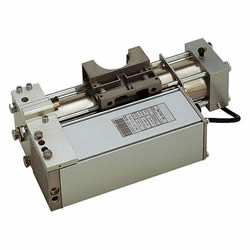
Linear actuators (also called ram-style operators) are the most widely used. A mechanical arm extends and retracts to push or pull each gate leaf. They mount above ground on the gate post and leaf, are easy to service, and are available in a wide range of weight and duty cycle ratings.
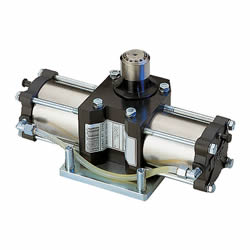
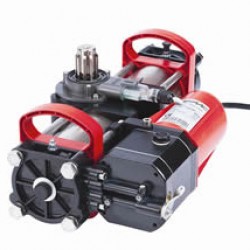
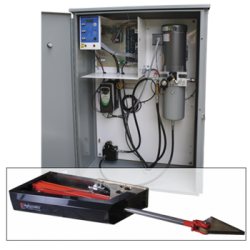
Underground operators are concealed entirely below the surface, with the mechanism buried inside a sealed housing beneath the gate post. They offer the cleanest aesthetic since no hardware is visible above ground. They work best in dry climates and well-drained soils. In areas with heavy rain, flooding, or high water tables, underground operators require more careful installation and maintenance.
Articulated arm operators use a folding arm to drive gate movement and can accommodate gates that need to swing in tighter arcs or that have unusual hinge placement. Less common than linear actuators but worth considering for non-standard gate configurations.
5. Safety Features
Any automatic gate system can cause injury or property damage if it closes on a person, vehicle, or animal. Look for these safety features before you buy:
- Obstruction detection / auto-reverse: The opener senses resistance during closing and reverses direction. This is a baseline requirement for any residential or commercial installation.
- Photocells and IR beams: Infrared beam sensors mounted across the gate opening detect if something breaks the beam during operation. The gate stops or reverses immediately. This is a code requirement in many jurisdictions for commercial applications.
- Loop detectors: Embedded induction loops in the driveway pavement detect vehicle presence, preventing the gate from closing on a vehicle that has not fully cleared the opening.
- Timer-to-close: Automatically closes the gate after a set delay. Useful for entrances where users sometimes forget to close.
- UL 325 compliance: The UL 325 standard governs gate operator safety in the United States. Operators carrying a UL 325 listing have been independently tested and certified for residential or commercial use.
6. Access Control Integration
Your opener is only as useful as the access control system connected to it. Most dual swing operators include terminals for connecting:
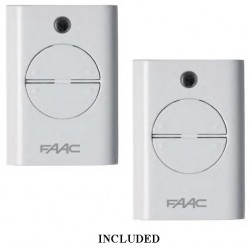
- Remote transmitters and receivers: Standard radio frequency remotes for personal or vehicle use
- Keypads: PIN-entry pads mounted at the gate for resident or employee access
- Card readers and proximity readers: Credential-based entry for multi-user or managed-access environments
- Telephone and cellular entry systems: Systems that call a designated number so you can grant access remotely
- Vehicle loop detectors: Exit loops that sense vehicles approaching from inside and trigger the gate open automatically
If you manage multiple users or need an audit trail of gate activity, plan your access control configuration before selecting your opener. Not all control boards support all access control types, and some advanced configurations require specific control boards or expansion modules.
7. Installation Considerations
Dual swing gate openers are not difficult to install for a qualified installer, but a few site conditions significantly affect which product is right for you:
- Post material and mounting surface: Operators mount to the gate post and gate leaf with hardware. Posts need to be solid enough to carry the load. Hollow steel posts typically need reinforcement plates.
- Swing clearance: Both leaves need unobstructed room to travel through their full arc. Check for landscaping, vehicles, walls, and grade changes along the swing path.
- Gate stop: Swing gates need a stop at the open position to prevent the leaf from over-traveling and stressing the operator arm. Some operators include adjustable built-in stops; others require a physical gate stop to be installed separately.
- Conduit and power runs: Plan your power routing before installation. Underground conduit to the gate post is standard practice for a clean, weather-protected installation.
Why Buy Your Dual Swing Gate Opener from Gate Openers Direct?
We have been selling and supporting gate automation equipment from our Houston, TX location for years, and dual swing systems are one of our specialties. When you order from us, you are not guessing on compatibility or spec-matching a motor to a gate you have never seen before. Our team talks through your application before you buy.
We carry residential and commercial dual swing operators from every major brand, with transparent pricing, real product knowledge, and support that does not disappear after the sale. If you have a technical question during installation, we are here. If you need a replacement part down the road, we can help you find it.
Call us at 713-330-3333, Monday through Friday, 10:00 AM to 5:00 PM. Or browse the products above and add your selected system to the cart — most orders ship fast, and we offer free shipping on qualifying orders.