People hear “Italian engineering” and they think sports cars.
In gate automation, it shows up differently: tight mechanical tolerances, smart hydraulic design, and equipment that’s built to run for years without drama—if it’s installed and maintained the right way.
I’m not here to tell you every FAAC operator is the perfect fit for every gate. It isn’t. But if you’re comparing brands and you keep seeing FAAC come up on commercial sites (and on higher-end residential installs), there’s a reason: FAAC builds high-end, professional gate automation equipment, not the plastic drive, cheap units sold at feed stores and highly discounted on the internet. Yes it is still true in the gate opener industry, you do get what you pay for. Keep reading and you will learn how to tell the difference.
What we’re covering
What “Italian engineering” actually means in gate automation (not marketing fluff)
Where FAAC tends to shine: smooth operation, duty cycle, and long-term reliability
Why FAAC 415 and FAAC 420 are two of the most practical swing gate choices out there
Where FAAC barrier gates make a lot of sense (and where they don’t)
A quick checklist to choose the right direction for your site
The short version
If you want a gate system that looks and feels smooth, runs quietly and consistently, and is built for real-world cycling, FAAC is a brand worth looking at—especially in applications where a well-designed swing operator is the difference between “it barely works” and “it easily works for years.”
If you’re trying to automate a gate with bad geometry, a dragging frame, poor hinges, or a “we’ll fix it later” install plan, no brand—FAAC included—is going to save you. The operator can’t out-engineer a gate that doesn’t swing freely. That’s about the same as expecting a car to run smoothly with no air in the tires.
What “Italian engineering” looks like at the gate
Here’s what I mean when I say it makes a difference.
1) Smooth power delivery (not just brute force)
A good operator doesn’t just “move the gate.” It moves it predictably—smooth start, travel, and soft stop—no slamming, shuddering, or hunting for limits. That smoothness isn’t just a “nice feel.” It’s what keeps you from beating up hinges, brackets, and weld points over time. It also extends the life of the opener which means you save money over time.
When customers tell me “our old opener always felt like it was fighting the gate,” that’s usually a system problem and an operator problem. With FAAC, the better installs feel controlled—like the operator and the gate are working together instead of arguing.
2) Built for duty (because gates don’t get days off)
A lot of people shop gate openers like they’re shopping a garage door opener: “How strong is it?” “How fast is it?” “What’s the max weight?”
Those questions matter, but the better questions are how often it is going to run, what kind of potential abuse will it be forced to endure, and HOW LONG do you expect to live behind or own this equipment—heat, wind load, misaligned gates, impatient drivers, and the occasional “let me see if I can push it” all reduce the life of openers.
FAAC tends to earn loyalty because their equipment is designed with a commercial mindset: consistent operation, repeatable performance, and the kind of build quality that holds up when the gate is used every day.
3) Serviceability (the part nobody thinks about until something breaks)
Even premium equipment will eventually need adjustments, wear parts, or troubleshooting. The difference is whether it’s a quick, sensible service call—or a three-hour mystery hunt.
Exceptional engineering isn’t just performance on day one. It’s also how the system behaves in year five when a property manager is calling because the gate is stuck open and the tenants are losing their minds. FAAC equipment is known for being rugged but also being repairable when the worst happens.
FAAC 415: the entry level, practical, dependable swing gate choice
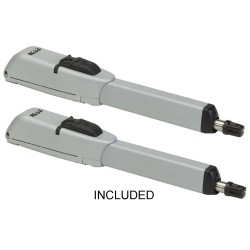
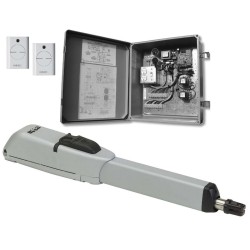
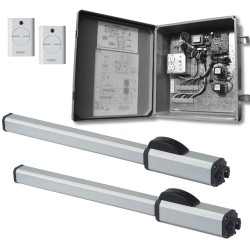
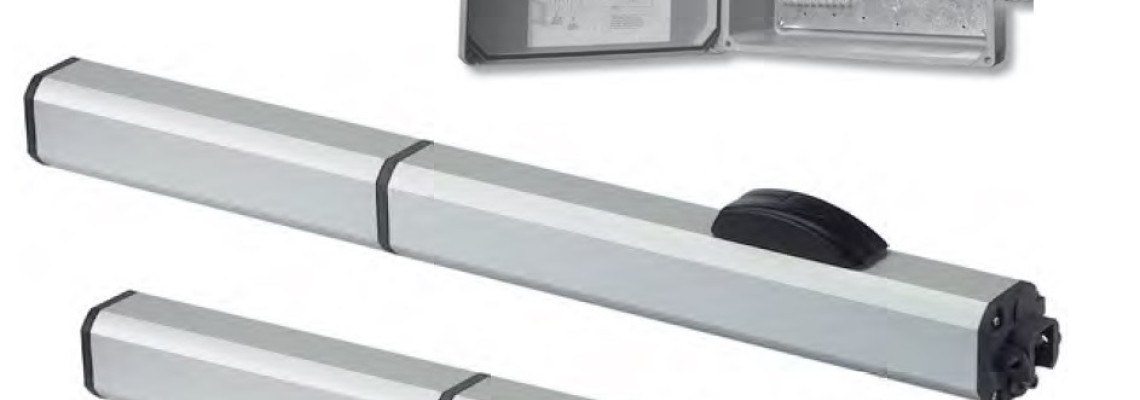
If you want my “most common recommendation” for many residential and light-commercial swing-gate jobs, the FAAC 415 is usually in the conversation.
Why? Because it’s the kind of operator that fits the real world: homeowners who want reliability but don’t expect to be the owners of this gate for many more years. While FAAC rates it for more, I would personally not recommend this unit for HOA’s, multi-residential applications or commercial gates. They offer much heavier-duty units for those installations.
The 415 is a great option when you want a straightforward swing gate operator that delivers smooth movement and predictable performance—especially when the gate is built correctly and the geometry is right.
FAAC Models 400, 402, and 422 : when you want a step up in capability. These are all true hydraulic drive actuators.
The FAAC 402 and 422—these are the models I bring up when the high-end residential swing gate is heavier, the usage is higher, and near-silent operation is desired. The units are almost identical. The main difference being that “hydraulic drives” all use fluid to push and pull the actuator piston in and out. When the gate is resting in either the open or close position a “lock” is needed to prevent that fluid from being able to be forced back through the system. The Model 402 has a “lock” in either the open or close position. The Model 422 has locks in BOTH. For that reason, I usually go straight to that model.
The FAAC 400 is their “flagship” hydraulic opener, with locks in both the closed and open positions, and it also offers the heaviest-duty hydraulics produced by this manufacturer.
In the field, the difference between “this should work” and “this will keep working” is often choosing the operator that isn’t living at the edge of its comfort zone. If the gate is a little oversized, the wind exposure is real, or the cycles per day are climbing, stepping up to the Model 400 is never a bad choice. A little “overkill” goes a long way on this opener choice.
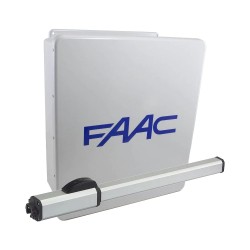
Where FAAC barrier gates fit (and why they’re not the same as a swing gate)
Barrier gates are a different animal. They’re not about moving a gate leaf—they’re about controlling traffic.
I like FAAC barrier gates for:
Parking lots and garages
Apartment entrances with high vehicle volume
Commercial properties that need fast, repeatable access control
Any site where you want a clear “stop/go” point without the footprint of a full swing/slide gate
The big advantage of a barrier arm is speed and throughput. If you’re trying to move a lot of cars, a barrier is often the cleanest solution. The trade-off is obvious: a barrier arm is traffic control, not perimeter security. If you need true security, you pair it with the right perimeter solution—or you choose a gate operator designed for that job.
When I wouldn’t push FAAC (or any premium brand)
This is the part most articles skip.
I’m not going to sell you a premium operator to cover up a gate that’s built wrong. If any of these are true, fix the gate first:
Gate sags or drags
Posts flex when the gate moves
Hinges bind or squeal
The gate doesn’t swing freely by hand
The installer is “figuring it out as they go” with geometry, electrical or technical skills. These are very good openers, but they ARE technical.
A quality operator will still struggle, and you’ll blame the brand when the real issue is the gate.
What actually determines success: the whole system
A gate opener is only one part of the automation system. The best installs I see have correct gate construction and geometry, proper safety devices (photo eyes, loops, edges as needed), clean wiring and surge protection, thoughtful access control (keypads, readers, remotes, timers), and a maintenance plan.
When those pieces are right, FAAC equipment really shows what it’s made of—because you’re letting the operator do its job instead of forcing it to compensate for everything else.
Jay’s quick checklist: is FAAC the right direction for you?
Answer these and you’ll be 90% of the way there.
Swing or slide? (FAAC is especially strong on swing gate and barrier gated automation.)
How often will it run? (Cycles per day matters more than most people think.)
What’s the gate construction? (Leaf length, weight, wind exposure, hinge type.)
What’s the environment? (Heat, cold, coastal air, dust, lightning.)
What’s the expectation? Convenience, traffic control, security—or a mix?
Who’s servicing it? A great operator with no service plan turns into a headache.
Bottom line
Italian engineering isn’t magic. It’s discipline.
FAAC has earned its reputation because their equipment is designed like it’s going to be used every day for years—because it is.
If you’re choosing between FAAC 415 (electromechanical) and FAAC 400 series (all-hydraulic drives), the simplest rule is: don’t size it to the bare minimum. Size it to the real world—wind loads, # of cycles per day (usage), and the fact that gates rarely stay perfectly aligned forever.
And if you’re dealing with high vehicle volume, don’t overlook FAAC barrier gates. They solve a different problem, and when they’re the right fit, they make the entire entrance feel smoother and more professional.
Why Gate Openers Direct is the one to call for FAAC
Here’s the truth: buying a FAAC operator is the easy part. Buying the right FAAC operator—and setting it up to run the way it’s supposed to—is what separates a smooth installation from an expensive problem.
When you call Gate Openers Direct, you’re not just ordering a box. You’re getting people who live in this world and will ask the questions that actually matter—gate size, gate weight, hinge type, cycles per day, wind exposure, power, and what you’re trying to accomplish (convenience, traffic control, security, or all three).
That matters because the fastest way to waste money in gate automation is to under-size the operator, skip the right accessories, or ignore the site conditions. We help you avoid that.
So if you’re looking at FAAC 415, FAAC 400’s, or a FAAC barrier gate, do yourself a favor: call Gate Openers Direct first. We’ll help you match the operator to the gate, not the other way around—and we’ll make sure you’re set up for a system that works today and keeps working.