I started working in the fence and gate industry in 1992, selling residential fencing and automatic gates. At the time, the industry was still in its early days, and only a handful of companies manufactured gate openers. They were expensive, but they were built to last! As with many industries, the market has since welcomed a wave of new companies. In some ways, that’s been a good thing, but in many others, it hasn’t. The quality of gate openers installed in the early 1990s was second to none. Back then, there weren’t five levels of openers to choose from. You either invested in a commercial-grade unit or braved the weather and opened your gate by hand. The average opener took two grown men to lift off the truck and place on a 2′ × 2′ × 2′ concrete block. By 1999, I had moved up in the industry and become the access control manager at one of Houston’s first gate automation distribution companies. I built strong relationships with manufacturers, developed a dealer network, provided technical support, and handled just about everything—except unloading the trucks and signing the checks (though I helped with the trucks sometimes, too!). After investing years of hard work, sweat equity, and countless miles on the road, I realized I was no longer moving forward when the owner brought his firstborn son into the business. So, at the end of 1999, I put down roots, placed an ad in the Yellow Pages, and started my own business. Like many small business owners, I began in my garage. The relationships I had built with manufacturers and dealers finally paid off, giving a hardworking man—much younger than I am today—a chance to make his own way. FAAC was one of the companies that took a chance on me, and it’s a brand I’ve always been proud to stand behind. This Italian manufacturer has been engineering gate systems since 1965, and its quality shines through in every unit we sell and recommend.
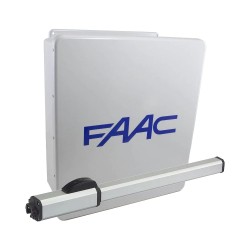
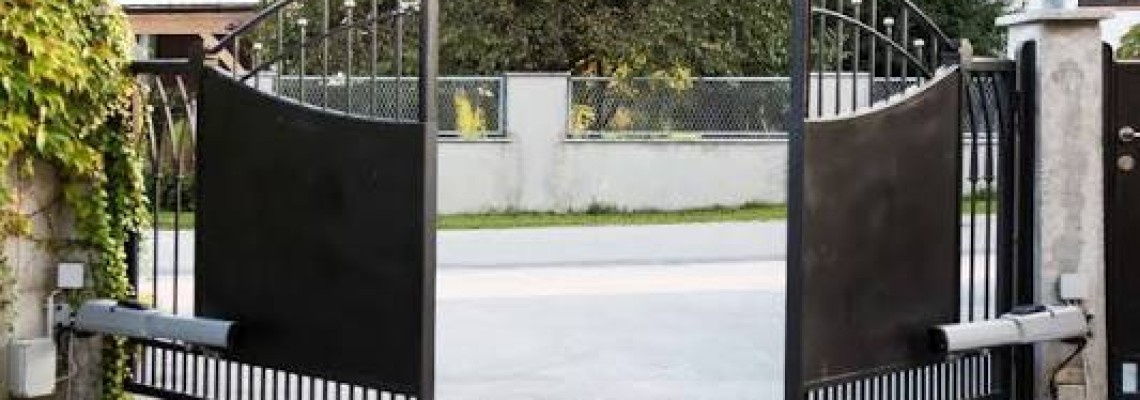
Very few of those companies from those early days still operate under their original corporate structure. FAAC is one of them. Although ownership has changed over the decades, it remains much the same company it was then. That’s not to say it hasn’t kept pace with the times: newer technologies in electronic control boards, safety features, and materials have all been incorporated into its product lines. Still, some of FAAC’s best units ever built retain that “last forever” engineering. When customers call asking about FAAC swing gate openers, the conversation almost always starts the same way: they assume the decision is about budget. It is not. The model you need is determined by your gate’s weight, leaf length, and how many cycles it runs each day. Get those three things right, along with a proper installation, and you will have a gate opener that lasts for many years. Get them wrong, and you will be replacing equipment that was never matched to the job. Install any of them poorly, and none of them will work properly from day one. I can’t stress enough how important a PROFESSIONAL INSTALLATION is no matter the brand, model or duty rating. Let me walk you through the FAAC swing gate lineup the way I walk every customer who demands quality.
The FAAC Swing Gate Lineup: Five Models, Five Applications
FAAC offers five primary swing gate operators, each engineered for a specific range of gate sizes, weights, and use levels. Here is how they compare at a glance:
| Model | Max Gate Weight | Max Leaf Length | Voltage | Operation Type | Best For |
| 390 | 600lbs | 14 ft | 24V DC | Electromechanical | Standard residential, column-mount installs |
| 415 | Varies | 13 ft | 24V DC or 120V AC | Hydraulic | Solar setups, rural installs, light commercial |
| 400 | 1,300 lbs | 16 ft | 120V AC | Hydraulic (CBAC) | Heavy commercial, gated communities, high-cycle use |
| 402 | 900 lbs | 10 ft | 24V DC | Hydraulic | Heavier residential gates, durability-focused buyers |
| 422 | 900 lbs | 10 ft | 115V AC | Electro-Hydraulic (CBAC) | Best all-around for demanding residential and light commercial |
Now let me explain what each of those rows actually means in practice.
The FAAC 390
The 390 is FAAC’s entry-level COLUMN-MOUNTED residential swing gate opener — and I want to be clear about what “entry-level” means here. It does not mean cheap or unreliable. It means this unit is purpose-built for mounting on columns. Brick, mortar, and concrete columns add beauty to the entrance of a high-end residence, but they also present geometric challenges that other models are not built for. This is a specific installation type, and when used correctly, it performs as expected.
Key specs: 24V DC, up to 600 lbs per leaf, up to 14 feet, ~13-second open time at 90 degrees.
What makes the 390 distinctive is its column-mount design. The articulated arm accommodates large pillar and column installations — so if your property has brick or stone columns at the entrance, this operator fits cleanly without major structural modifications.
I had a customer with a 10-foot wrought-iron gate, a standard residential driveway, and 15 to 20 cycles a day. The 390 was exactly the right call. He has had it for years without a problem.
The 390 is right for you if: your gate is under 600 lbs, under 14 feet, and you are cycling it a few dozen times a day at most.
Enter the Hydraulics! Where quality is the norm, and the customer demands the best!
Hydraulic operators are self-lubricating, run quieter than electromechanical units, and hold up better over time with consistent use. One caveat to know about the model 402 openers. With ALL hydraulic openers, they do not use “limit switches” to tell the control board it is in the open or closed position. The control boards on hydraulic openers look for an amperage jump to know when to turn off in the fully open or closed position. For that reason, gates driven by hydraulic openers need some kind of “POSITIVE STOP” that the gate closes or opens against. The pump in the arm builds pressure when the gate encounters this positive stop. The control board recognizes that and turns off. FAAC offers an ingenious “concealed positive stop” that allows the ram tube to press against instead of requiring the actual gate to encounter it. This lets the gate stop in the same spot every time, whether open or closed.
The 402 is where FAAC enters hydraulic territory—a meaningful step up.
Key specs: 24V DC, up to 900 lbs per leaf, and gates up to 10 feet long.
The main tradeoff is a shorter maximum leaf length than the 390. If your gate is longer than 10 feet, this isn’t the right model. But if your gate is on the heavier side and you want hydraulic reliability without moving into the 400 series price range, the 402 delivers. If you’re “on the fence” about whether you need or want hydraulics, my usual answer is: if you can afford it, get it.
The 402 is right for you if your gate is heavier but under 10 feet, and you want residential-level hydraulic performance.
What makes the 402 unique: Hydraulic openers can be “backdriven.” When force is exerted on the gate, fluid is pushed backward through the pump, allowing the gate to “drift” or “backdrive.” To prevent this, FAAC uses a simple, unique “lock” that allows fluid to move in only one direction. The lock can be installed on the “open side” or the “closed side” of the unit, and the 402 comes with one or the other, BUT NOT BOTH. So, if your gate will always be closed when not in use, order the 402 with the lock in the CLOSED position. Conversely, if the gate will always be open when not in use, order it with the lock in the OPEN position. FOR THIS REASON, I RARELY RECOMMEND THE MODEL 402. Instead, I recommend the model 422. This model comes from the factory with locks in the OPEN AND CLOSED positions, and its price is almost the same.
FAAC 422: The Lighter Duty Hydraulic Model
If someone calls me describing a nice residential property or a light commercial application and is unsure which model to choose, I often recommend the 422. It is my preferred economical buy in the FAAC lineup for many customers. Here is why.
Key specs: 115V AC, up to 900 lbs per leaf, up to 10 feet, ~12-second open time at 90 degrees. Electrohydraulic operation with CBAC locking in both positions.
That 12-second open time is noticeably faster than on the 415 and the 400. The CBAC locking system secures the gate in both positions without relying solely on the motor. And the electrohydraulic design delivers quiet operation, self-lubrication, and a long service life.
What I tell people is this: the 422 is not the cheapest option, and it is not the most expensive. It is where Italian engineering, hydraulic reliability, and real-world performance come together at a level that makes sense for the application most of our customers actually have — demanding single-family residential and light commercial properties that see consistent daily use without reaching true heavy commercial volume.
The 422 is right for you if: You want the best value in the FAAC lineup for a demanding residential or light commercial application and you want a system you will not be worrying about in two years.
FAAC 400: When the Gate Is Bigger Than Most
The 400 is FAAC’s heavy hitter in the swing gate lineup. This is a high-voltage hydraulic operator built for installations where the customer demands the best, the gate requires it, and the budget allows for it! With proper maintenance, these units often last 20 years or more. Old-school quality, no excuses, and the best hydraulics money can buy is not a catchphrase with this opener. It is the standard by which others are measured in this industry.
Key specs: 120V AC, up to 1,300 lbs per leaf, up to 16 feet, up to 70 cycles per hour, ~18-second open time. UL 325 compliant across all four classes. CBAC hydraulic locking in both open and closed positions. That CBAC designation matters in commercial settings. It means the gate hydraulically locks in place rather than relying solely on the motor to hold position — a real security advantage when you need to know the gate stays where you put it. Concealed positive stops are still an advantage on this model because they stop your gate without it needing to “encounter” a stop externally.
Contractors call us specifically for the 400 when they are spec-ing out a job that needs a proven heavy-duty hydraulic unit—gated community entrances, commercial facilities, agricultural properties with substantial main gates. The 400 series has been in the FAAC lineup for a reason. It works, and it holds up.
The 400 is right for you if you have a longer, heavy gate. High-end residential (regardless of gate size or weight), commercial facilities, gated communities, or high-cycle properties.
FAAC 415: The Economy Model That Solves Your Power Problem
The 415 is the operator I talk about most often when a customer is trying to figure out their power situation. FAAC offers it in only 24V DC configurations — and that is genuinely useful because not every installation has dependable 120-volt service. In power outages, it keeps running with its battery backup, now standard.
Key specs: Handles demanding residential use but is not designed for commercial applications in my opinion. It has an approximate 18-second open time at 90 degrees.
The low-voltage version of the 415 pairs well with solar setups, which comes up regularly with customers in rural areas or on larger properties where running power to the gate is a significant project.
The 415 dual kit — the budget is not sufficient to afford hydraulics or justify the 400 series, but it is definitely more robust than anything off “the super cheap internet models.. The 415 lives comfortably in that middle zone.
The 415 is right for you if: Your power situation is not dependable, you want solar compatibility, or you need light residential capacity with installation flexibility.
The Most Common Buying Mistake — and How to Avoid It
The biggest mistake I see is customers buying the least expensive model without accounting for gate weight and daily cycle count. A lighter operator on a heavy gate does not just underperform — it wears itself out. Spending a little more upfront to match the right operator to the job is always the smarter move.
Here is a quick framework for the decision in order of application and budget.
- Column Mount, Under 600 lbs, under 14 ft, standard residential: Start with the 390 (FAAC now has acquired VIKING ACCESS and offers a hybrid model of this opener now, with seamless battery backup, the patented and super user friendly Viking VFLEX control board and more).
- Power access is limited or you need solar compatibility: The 415
- Heavier gate, under 10 ft, that stands either open or closed most of the time and customer wants to move up into hydraulics: Look at the 402
- Lighter hydraulics for residential or light commercial: The 422
- Large, heavy gate, commercial or high-cycle use where nothing but the best, most reliable and longest life possible: The 400
Frequently Asked Questions About FAAC Swing Gate Openers
What is the difference between electromechanical and hydraulic FAAC gate openers? Electromechanical operators use a motor and gear system. Hydraulic operators use fluid pressure, making them quieter, self-lubricating, and generally more durable under consistent use. For higher-traffic or heavier applications, hydraulic is usually the better long-term investment.
Can FAAC swing gate openers be used with solar panels? Yes. The 24V DC models — particularly the 415 in its low-voltage configuration — are compatible with solar setups. This is a common solution for rural properties or locations where running power to the gate would be a major project.
What does CBAC mean on a FAAC gate opener? CBAC stands for Check And Block, FAAC’s hydraulic locking system that secures the gate in both the open and closed positions. It provides holding strength independent of the motor, which is especially important for commercial and security-sensitive applications.
Does buying from Gate Openers Direct protect my FAAC warranty? Yes. As an authorized FAAC dealer, Gate Openers Direct ensures that purchases come with the full manufacturer's warranty intact. Buying from unauthorized resellers can void that coverage — something most buyers do not discover until they need it.
How do I know if my gate is too heavy for the model I’m considering? A good rule of thumb: weigh or estimate your gate’s leaf weight, measure its length, and match both to the model’s specs. When in doubt, call us. We walk through the application with every customer before recommending a model, and a five-minute conversation can save you from buying the wrong unit.
Why Buy FAAC From Gate Openers Direct
EXPERIENCE! Since 1992 I have been in the automated gate business. We have been stocking FAAC since the beginning because we believe in the product and equally as important, FAAC BELIEVED IN US!. When you buy through us as an authorized dealer, your manufacturer warranty stays intact and you have access to our technical support after the sale — whether you have questions during installation or six months down the road.
We also sell at wholesale direct pricing and take the time to talk through your specific application before you order. Every gate situation is a little different. Getting the right model is worth five minutes on the phone.
Call Jay Leatherwood at Gate Openers Direct: 713-330-3333
Email: sales@gateoperator.net
Monday–Friday, 10 AM–5 PM
THANK YOU FOR YOUR CONSIDERATION OF OUR COMPANY!